






Community Cat Update:
Kitsap Humane Society currently has very limited capacity to intake or house any healthy feral or community cats – specifically, cats that are not able to be handled and must be caught in a humane cat trap in order to be safely brought to our shelter.
If there is a feral or community cat on your property that you wish to bring to the shelter for rehoming, or you have a colony of cats that you are feeding (10 or more neighborhood cats), please email admissions@kitsap-humane.org for information about making an appointment to bring the cat to the shelter. PLEASE NOTE: WE ARE UNABLE TO ACCEPT WALK-IN DROP-OFFS OF TRAPPED CATS, AND AN APPOINTMENT IS REQUIRED.
To schedule an appointment, you must complete and submit a Community Cat Intake Appointment Request Form.
What is an Outdoor or Community Cat?
The different terms for outdoor cats can be confusing, but whether you’re talking about your inside lap kitty or a skittish cat who lives exclusively outdoors, they’re all the same domestic cat species, felis catus. Some terms such as “feral” and “tame” describe a cat’s behavior around humans. Other terms, including “community cat,” “stray cat,” “barn cat” and “alley cat,” describe a cat’s lifestyle or ownership status. Learn more about these and other terms we use for cats.
Compassionate neighbors care for many community cats and provide food, water, and even outdoor shelter. Other cats thrive in our temperate climate without any human intervention.
Kitsap Humane Society believes that community cats should be kept out of the shelter. We promote Trap/Neuter/Return (TNR), which has proven to be the most effective, humane method of reducing community cat populations. Through TNR, community cats are humanely trapped, vaccinated, spayed/neutered, ear-tipped, and returned to their outdoor home to live out their lives.
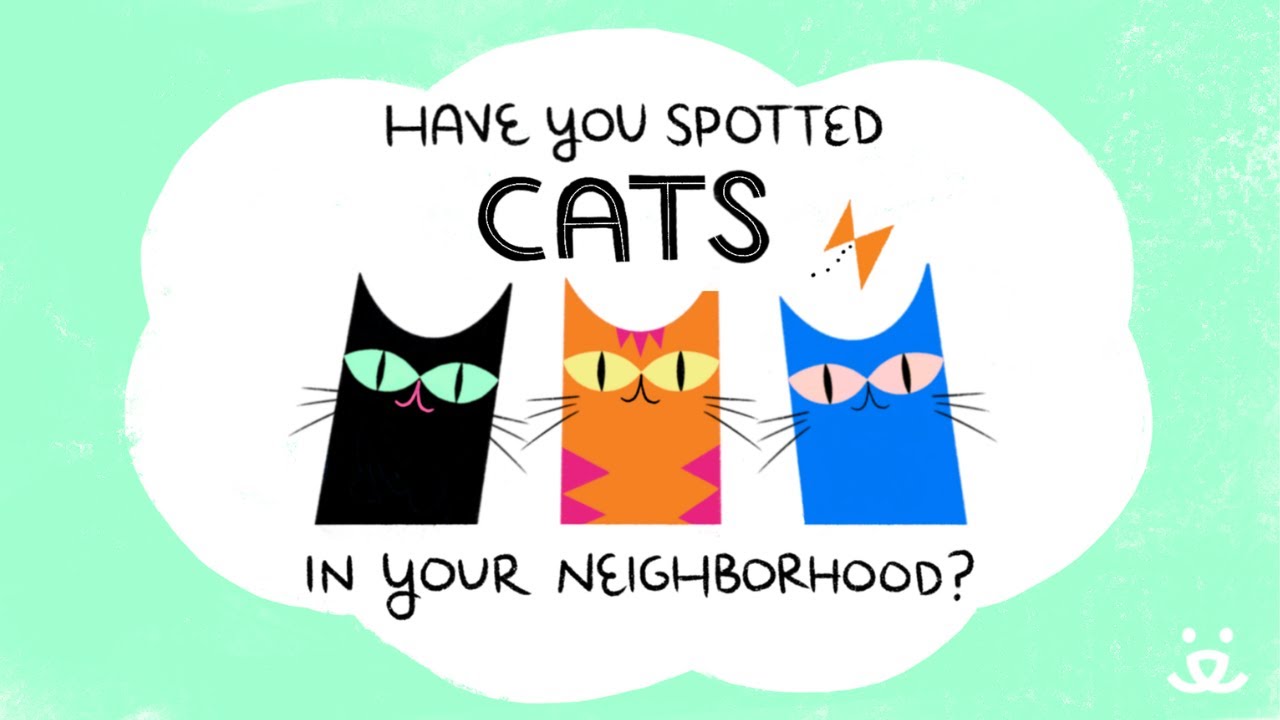
How can I tell if a cat I see outside is lost or needs my help?
If you’re outside and spot a cat lounging in the grass or by the side of the road, follow these steps to determine if the cat needs your help.
I’ve found a litter of kittens; should I rescue them?
Before you scoop up a litter of newborn kittens, keep in mind that, depending on their age, the kittens may be better off with their mom (for a while, at least). Check out these guidelines for whether and when you should rescue kittens.
How can I keep cats out of my yard or garden?
Just as there are nonlethal ways to resolve problems with raccoons, opossums or other wild animals, there are humane solutions for keeping cats away from areas where they’re not welcome. Whether your goal is to prevent neighborhood cats from digging in your garden, upsetting your indoor pets or leaving paw prints on your car, a little ingenuity and some high- and low-tech strategies will teach outdoors cats to avoid off-limits areas. Among some of the most effective – and feline-safe – methods are:
- Motion-Activated Sprinklers: The most effective method, as cats dislike water and the surprise factor.
- Scent Repellents: Scatter citrus peels (orange, lemon), coffee grounds, pipe tobacco, or citronella.
- Spiky Ground Cover: Place pinecones, chicken wire, or specialized Cat Scat mats on top of soil to prevent digging.
- Plants: Plant Coleus canina (Scaredy-Cat plant), lavender, or rue.
- Physical Barriers: Seal gaps under fences or decks, and cover exposed soil in garden beds with large, heavy stones.
I’m already feeding outdoor cats. What cans I do to improve their health and safety?
The most important thing you can do to protect the health and safety of the cats you feed is to ensure they’re sterilized and vaccinated. In addition, you can be a stellar caretaker by following smart feeding practices, providing winter shelter, monitoring cats for health issues, and keeping the peace between cats and their human neighbors.
Where do community cats live?
Population estimates vary widely, but most experts agree that tens of millions of community cats live in the U.S. They’re predominantly found near where people live or work. They can thrive in densely populated areas, where there’s easy access to food and shelter, as well as rural settings, where they’re often called barn cats. Community cats may live alone or in pairs or congregate in groups. Rarely do you find cats living in remote areas in the U.S., surviving without the help of humans.
Who takes care of community cats?
An estimated 10%-12% of the American public feed community cats. In addition to providing daily meals and fresh water, these cat caregivers may provide dedicated shelter to protect the cats in inclement weather and provide medical care if the cats become sick or injured. They look out for the cats and often participate in TNR efforts to get the cats fixed and vaccinated and work with other residents to mitigate any complaints that arise due to the presence of the outdoor cats.
How can I help combat cat overpopulation?
Solving cat overpopulation is a complex undertaking that involves both humanely reducing the population of community cats and preventing the addition of more cats. There’s no quick fix and no single solution—a combination of tools is needed:
- Spaying and neutering of community cats through strategic, high-intensity TNR and related programs. To effectively reduce the population, approximately 80% of the cats in the focus area (or community) need to be sterilized.
- Spaying and neutering of owned cats and cats adopted from shelters and rescues before they’re 5 months old (because cats can have kittens while they’re still kittens).
- Helping people keep their own cats when faced with cat behavior challenges as well as their own financial struggles or housing.
- Providing people with options and assistance for rehoming cats they can no longer keep so that those cats aren’t abandoned outdoors.
- Encouraging people to keep their owned cats indoors and promoting strategies to keep cats happy and active with an indoors lifestyle.
Community cat information provided with assistance from our friends at Humane World for Animals.
Price Reduced! $30 Spay/Neuter for Feral Cats
Do you help care for a feral/community cat colony? Or do you have feral cats living in your neighborhood?
Kitsap Humane Society is here to help, with $30 spay/neuter surgeries for feral or community cats ONLY (no pets included).
Here are some of the details:
- You must trap and transport the community/feral cats to and from the shelter.
- Traps can be borrowed from KHS with a $100 refundable deposit per trap.
- Pets (owned animals) are not included in this offer.
- Kittens must be over the age of 8 weeks and weigh at least 2 pounds to be eligible for surgery
- Includes mandatory ear-tipping, rabies & FVCRP (distemper) vaccines.
- Community cat surgery is by appointment only and can be booked here.
- Surgeries are performed Mondays through Fridays.
- KHS does not have the capacity to house community cats overnight. Please be prepared to drop off in the morning and pick up the same day (drop off windows are: 7:15 a.m. – 8:00 a.m. and pick up is between 3:00 p.m. and 5:00 p.m.).
- Plan to trap the cat an evening or two before your appointment.
- Do not give the cat any food after midnight the evening before your appointment (a little water is OK).
- You will receive more detailed instructions about our drop-off and pick-up protocols when your appointment is confirmed.
- If you have questions about the feral cat surgery scheduling system, please contact khsvet@kitsap-humane.org for support.
Thank you for helping cats and reducing kitty overpopulation in our community!

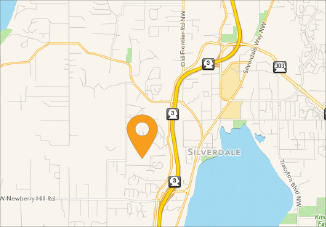
Kitsap Humane Society
9167 Dickey Road NW
Silverdale, WA 98383
- Phone:
- (360) 692-6977
- Fax:
Our fax is currently disabled.
Please email general correspondence to customerservice@kitsap-humane.org
For clinic communications, please email khsvet@kitsap-humane.org
For Public Records Requests: please email ncherry@kitsap-humane.org
If you have a domestic animal emergency, please call 911. If it is not an emergency, please call 360-328-7711.
For questions regarding donations: please email info@kitsap-humane.org
Kitsap Humane Society is a 501(c)(3)organization.
Tax ID Number: 91-0728353
Adoption Hours
- Monday:
- Noon – 4 pm
- Tuesday:
Wednesday:
Thursday:
Friday:
Saturday:
Sunday: - Closed
Noon – 4 pm
Noon – 4 pm
Noon – 4 pm
Noon – 4 pm
Noon – 4 pm
Walk-through viewing is available from noon to 5 pm every day except Tuesday. Adoptions close at 4 pm.
All adoptions are first-come, first-served. We are closed on major holidays.
Stray Animal Admissions Hours
Every day: 11 am – 4 pm
Feral cats/cats in traps: By appointment only.
Owner Surrenders & Private Euthanasia
By appointment only.
Pet Reclaim Hours
Every day: 11 am – 5 pm
Pet Food Pantry Hours
Every day: Noon – 4 pm
Search our site